Best padel racket for beginners: what to buy and what to avoid
The best padel racket for beginners is not one particular model but a type: a round or soft teardrop shape, a weight of about 340 to 370 grams, a low balance and a soft core, at a price of roughly £50 to £120. That combination gives you a large sweet spot, plenty of control and less strain on your arm while you learn the strokes.
Written byTeam Custom Your Padel
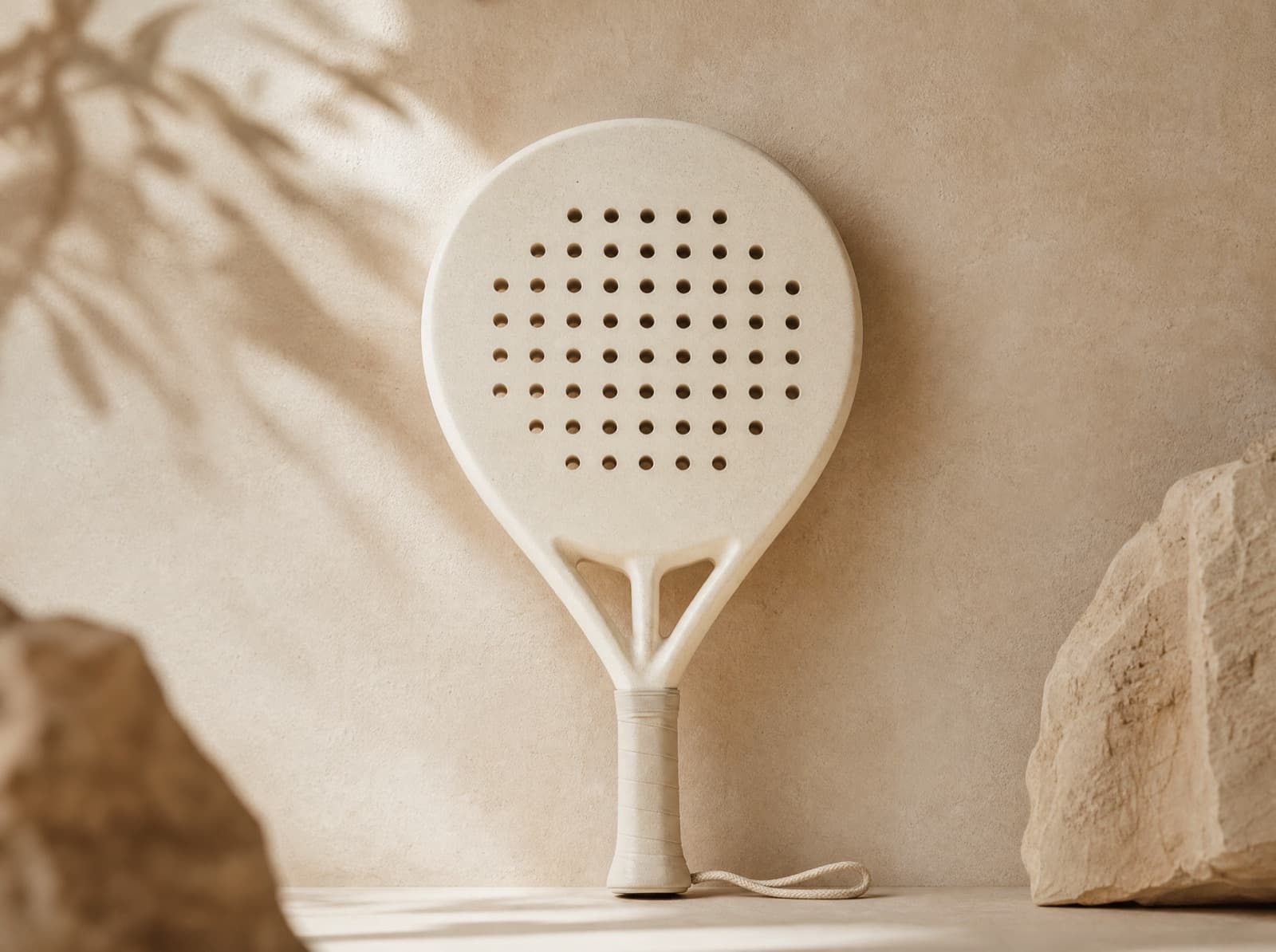
Most racket descriptions promise power, speed and explosive smashes. As a beginner you need almost the opposite. This guide covers what to look for in a first racket, what to leave on the shelf and how much to spend.
What makes a padel racket good for beginners?
A good beginner racket forgives mistakes. In your first months you will often hit the ball off-centre and swing a little late. A racket that is easy to move and still returns the ball when you miss the sweet spot makes those months more fun, and helps you build a sound technique. Five things decide that.
| Property | Beginner choice | Why | Leave for later |
|---|---|---|---|
| Shape | Round, or a soft teardrop | Largest sweet spot, most control | Diamond |
| Weight | About 340 to 370 g | Easy to move, light on the arm | Above about 375 g |
| Balance | Low (head-light) or medium | Quick at the net, less load on the elbow | High (head-heavy) |
| Core | Soft or medium EVA, or foam | Comfortable, the ball comes off easily at slow swing speeds | Hard EVA |
| Price | Roughly £50 to £120 | Sound materials without paying for pro features | Above about £150 |
Which shape should a beginner choose?
Padel rackets come in three main shapes, and the shape decides where the sweet spot sits. A round racket has its sweet spot in the middle of the face and the largest margin for error, which makes it the easiest shape to learn with. A teardrop racket has the sweet spot slightly higher and adds a little power; a soft, low-balanced teardrop also suits beginners. A diamond racket has the sweet spot high in the head and is built for attacking players who hit hard overheads. It punishes off-centre hits. If you remember one thing from this guide, make it this: round or teardrop, not diamond.
What weight should a beginner’s padel racket be?
Most padel rackets weigh between about 340 and 385 grams. For beginners, about 340 to 370 grams is a common recommendation: light enough to move quickly at the net, heavy enough to stay stable against a hard ball. Juniors, players with a lighter build and anyone with a history of shoulder or elbow trouble do well at the lighter end. Many brands list a weight range rather than one figure, so expect a few grams of difference. If you are torn between two weights, take the lighter one: a racket that is too heavy tires your arm long before the end of a session.
Why does balance matter so much?
The balance point tells you where the weight sits. A low balance puts more of the weight towards the handle: the racket feels lighter, comes up quickly at the net and puts less load on your elbow. A high balance puts the weight in the head: more punch on a smash, but slower to handle and harder on the arm. Most rackets are labelled low, medium or high balance. As a beginner, choose low or medium.
Soft or hard: which core suits a beginner?
Inside every padel racket sits a core of EVA rubber or foam. A soft core gives the ball an easy push off the face, even when you swing slowly, and absorbs more of the shock. A hard core gives precision and power, but only with a fast swing; at beginner speeds it feels stiff and sends more vibration into your arm. For a first racket, soft or medium is the sensible choice. Look for words such as soft, comfort or control in the description.
Fibreglass or carbon for a first racket?
Fibreglass is more flexible, feels softer and is common in cheaper rackets. Carbon is stiffer, more durable and gives a more direct feel for the ball. Both work for a beginner: fibreglass or a soft-cored carbon racket if comfort matters most, carbon if you expect to play twice a week or more. Codes such as 3K, 12K and 18K describe how the carbon is woven, not how well a racket plays; see 3K, 12K and 18K carbon in a padel racket.
How much should a beginner spend on a padel racket?
In the UK, a solid beginner racket typically costs roughly £50 to £120. The big brands such as Bullpadel, Head, Nox, Adidas and Babolat all have beginner and intermediate ranges, with entry models from roughly £40 to £60. Above about £150 you mostly pay for stiffer materials, signature models and marketing aimed at advanced players. As a beginner, that money is better spent on a few lessons. Every price bracket is set out in how much does a padel racket cost.
What should you avoid as a beginner?
- A diamond shape. Too little margin for error while you are still learning.
- A head-heavy balance. Slow at the net and hard on the elbow.
- A hard core. It needs a fast swing before it gives anything back.
- The racket of your favourite professional. It is tuned to a technique and swing speed you do not have yet.
- Buying before you have played. Many clubs hire out rackets, so play a few sessions first and notice what feels comfortable.
Is a custom racket a good first racket?
It can be. At Custom Your Padel we personalise one racket model: round, with a 100% carbon face, an EVA foam core and a weight of about 360 grams, made for recreational players from beginner to intermediate level. On shape and weight that matches the profile above. The racket comes from Asia and we personalise it in our workshop in the Netherlands, from a single racket: €79.99 blank, €99.99 with your design on the face and €119.99 as Full Custom with the side printed too, including VAT. Shipping is added at checkout (€17.95 to the UK, where import duties and VAT may apply for the recipient), and the racket is at your door within 10 working days.
It is one model, so you cannot compare shapes or weights with us; for that, a club or a shop with demo rackets is the better place. All options are on the page for a personalised padel racket. To fine-tune your choice later, read how to choose a padel racket. New to the game? Start with what is padel.
Open the designer and start your design →
Frequently asked questions
Is a round or teardrop racket better for a beginner?
Round is the safest choice: it has the largest sweet spot and the most control. A teardrop with a low balance and a soft core also suits beginners, especially players who come from tennis and want a little more power. Leave diamond rackets until your technique is settled.
How long does a beginner padel racket last?
It depends on how often you play and how you treat it. Played once or twice a week, a racket typically keeps its feel for roughly one to two years before the core loses some of its liveliness. Knocks against the walls and the floor, and heat in a car boot, shorten that. A cover helps against scratches and knocks.
Can I play padel with a tennis or squash racket?
No. Padel is played with a solid, perforated racket without strings, which is shorter than a tennis racket and has a wrist cord. Tennis and squash rackets are not used in padel. If you do not have a racket yet, many clubs hire them out.
Do women and juniors need a different beginner racket?
Not a different type, but often a lighter one. Many women start well at about 340 to 360 grams. Young children usually play with a junior racket, which is smaller and lighter; from around 12, depending on height and strength, many move on to a light adult racket.
Is a custom padel racket suitable for beginners?
Yes. The racket from Custom Your Padel is round, weighs about 360 grams and has a 100% carbon face with an EVA foam core, made for players from beginner to intermediate level. It costs €99.99 with your design on the face, €119.99 with the side printed as well, or €79.99 blank, including VAT, with shipping added at checkout.
Read next
- Guide
Brand racket or custom padel racket: which suits your game?
Brand racket or custom padel racket? An honest comparison of quality, price, personality and delivery time, plus how to decide which one suits your game.
- Guide
How to choose a padel racket: shape, weight, balance and core
How to choose a padel racket by shape, weight, balance, core hardness and face material, for any level. A clear table and honest guidelines.
- Guide
Padel rules and scoring: a clear guide for beginners
How does padel scoring work, how do you serve, and when do you lose a point? The main rules explained, based on the international FIP rulebook.